The graphic design industry continues to evolve at a rapid pace, and 2025 is shaping up to be a transformative year for brands, designers, and digital experiences. As emerging technologies become more accessible and consumers expect deeper engagement, new trends are redefining how companies communicate their message and build meaningful connections with audiences.
Among the most influential developments are Augmented Reality (AR) and Neurodesign, two powerful approaches that are changing the way brands create visual experiences, strengthen customer relationships, and differentiate themselves in competitive markets.
Augmented Reality: Creating Interactive and Immersive Brand Experiences
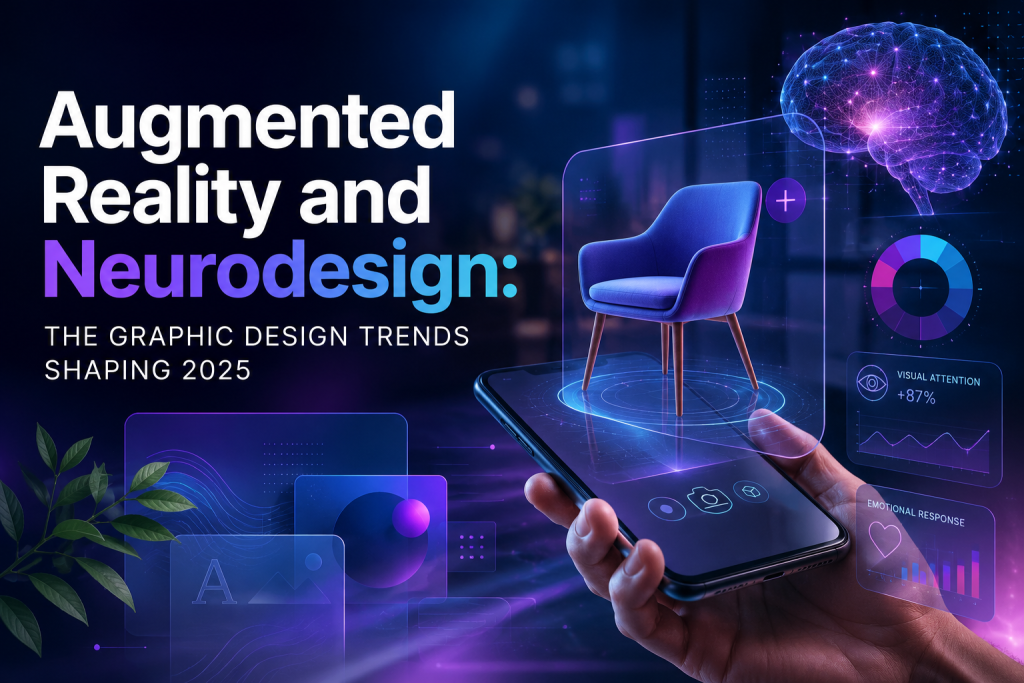
Augmented Reality is quickly becoming a key tool for businesses looking to create memorable customer experiences. By overlaying digital elements onto the physical world, AR transforms passive interactions into engaging, interactive journeys.
In 2025, experts expect AR to become increasingly common across retail environments, marketing campaigns, websites, mobile applications, and even brand identity systems.
For example, companies can use AR to offer:
- 3D product visualizations
- Interactive product demonstrations
- Immersive storytelling experiences
- Gamified marketing campaigns
- Virtual showrooms and retail experiences
Imagine a customer pointing their smartphone at a logo, product package, or advertisement and instantly accessing an interactive brand story, product tutorial, or immersive experience. These interactions increase engagement, improve brand recall, and create stronger emotional connections with consumers.
As AR technology becomes more accessible, businesses of all sizes have new opportunities to enhance their visual communication strategies and create unique customer experiences.
Neurodesign: The Science Behind Effective Visual Communication
Another major trend influencing modern branding is Neurodesign, a design methodology rooted in neuroscience and consumer psychology.
Neurodesign focuses on understanding how the human brain processes visual information and uses those insights to create designs that generate stronger emotional responses and improve information retention.
Through the strategic use of colors, shapes, layouts, and visual stimuli, designers can influence perception, attention, and even purchasing decisions.
For example:
- Bold, high-contrast colors can attract attention in crowded digital environments.
- Organic shapes often create feelings of comfort, trust, and familiarity.
- Balanced layouts can reduce cognitive load and improve usability.
- Visual hierarchies help guide users toward key actions and messages.
This approach is particularly valuable in branding and visual identity projects, where the goal is to create memorable experiences that resonate deeply with target audiences.
By combining creativity with behavioral science, neurodesign helps brands communicate more effectively and build stronger emotional connections.
Sustainability Continues to Influence Graphic Design
Alongside technological innovation, sustainability remains a major priority for businesses and consumers worldwide.
In 2025, brands are increasingly adopting environmentally responsible design practices, including:
- Recyclable and eco-friendly materials
- Sustainable packaging solutions
- Low-impact printing processes
- Digital-first marketing strategies
- Environmentally conscious brand messaging
Consumers are paying closer attention to corporate responsibility, making sustainability not only an ethical choice but also a strategic advantage.
Brands that successfully integrate sustainable practices into their visual communication often strengthen trust, credibility, and long-term customer loyalty.
How Businesses Can Apply These Design Trends
Successfully implementing these emerging trends requires more than simply following industry buzzwords. It requires a thoughtful strategy that aligns innovation with brand goals and customer expectations.
Companies looking to leverage Augmented Reality, Neurodesign, and modern visual identity systems should focus on creating experiences that are both visually engaging and user-centered.
At ID7 Studio, we help businesses build future-ready brands through strategic visual identity design, branding, and logo creation services that combine creativity, technology, and market insight.
You may also enjoy reading our article on how corporate identity strengthens brand value, which explores the impact of strategic branding on business growth.
The Future of Graphic Design Is More Human and More Immersive
The most important graphic design trends of 2025 reveal a fascinating balance between technological innovation and human-centered design.
Augmented Reality is transforming how people interact with brands, Neurodesign is helping companies create deeper emotional connections, and sustainability is driving more responsible creative decisions.
Together, these trends are reshaping the future of branding and visual communication.
Businesses that embrace these innovations today will be better positioned to capture attention, build loyalty, and stand out in an increasingly competitive digital landscape.
If you’re looking to modernize your brand, enhance your visual identity, or create innovative digital experiences, partnering with experienced designers can help turn these trends into measurable business results.
Ready to Future-Proof Your Brand?
At ID7 Studio, we combine strategic branding, visual identity design, web design, and digital innovation to help businesses create memorable customer experiences.
Whether you’re launching a new brand or refreshing an existing one, our team can help you leverage the latest design trends while maintaining a strong, consistent brand presence.
👉 Talk to a branding specialist today and discover how innovative design can elevate your business.