In recent years, Google Core Web Vitals have become one of the most important factors for organic search rankings. Website speed, visual stability, and responsiveness now directly influence how sites perform in Google search results.
But there’s an important detail that many people overlook: the pursuit of a faster website should never come at the expense of visual quality, user experience, or brand impact.
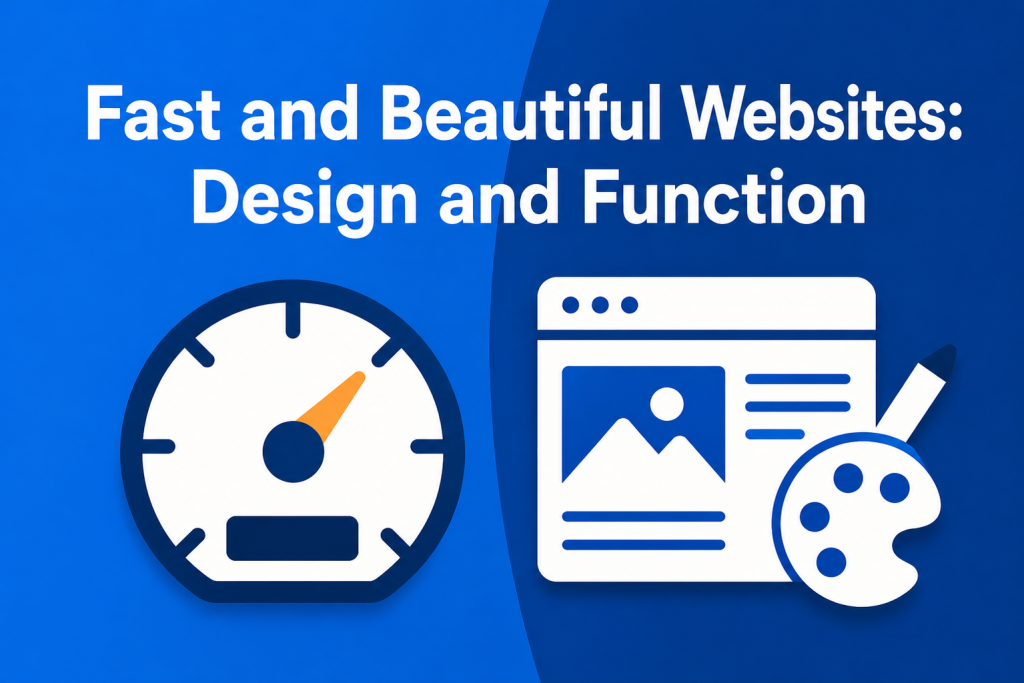
In today’s highly competitive digital landscape, the real challenge is balancing form and function — creating websites that are visually impressive while also being fast, accessible, and technically optimized.
That balance is exactly what defines a high-performance website: beautiful, functional, and strategically designed.
Why Website Speed Matters So Much
Page loading speed directly affects user experience and conversion rates. Studies from Google Lighthouse show that even a one-second delay in loading time can reduce conversions by up to 20%.
Google also uses Core Web Vitals — a set of metrics focused on user experience quality — as part of its ranking algorithm.
These metrics evaluate factors such as:
- LCP (Largest Contentful Paint): measures how quickly the main content becomes visible;
- FID (First Input Delay): evaluates how responsive the website is to the user’s first interaction;
- CLS (Cumulative Layout Shift): measures visual stability during page loading to avoid disruptive layout shifts.
Websites that perform well in these metrics typically achieve:
- better Google rankings;
- lower bounce rates;
- higher engagement and retention.
In other words, investing in website performance means investing directly in measurable business results.
The Value of Design and Visual Experience
On the other hand, speed alone is not enough.
A fast website with poor design can still feel unprofessional, fail to create emotional connection, and weaken brand perception.
Design is what creates trust, reinforces credibility, and communicates a company’s positioning.
Well-designed visual elements — including colors, typography, imagery, spacing, animations, and content hierarchy — help visitors instantly understand what a brand represents.
That’s why visual identity and branding design remain essential, even in a digital world increasingly driven by technical metrics.
As we often say at ID7 Studio, design is not just aesthetics — it’s strategy.
Design should guide attention, highlight the right content, improve usability, and increase conversions. And that’s just as important as achieving excellent loading speed.
The Balance Between Performance and Beauty
The secret lies in finding the right balance.
A high-performance website does not need to feel overly minimal or sacrifice engaging visual experiences. With the right architecture and smart use of modern technologies, businesses can achieve the best of both worlds.
Some examples of best practices include:
- Optimized images using WebP formats and lazy loading;
- Carefully controlled animations using lightweight CSS and Lottie instead of heavy video backgrounds;
- Smart caching and CDN integration for faster content delivery worldwide;
- Optimized fonts hosted locally to reduce external requests;
- Well-configured plugins to prevent unnecessary WordPress overhead.
When combined correctly, these practices make it possible to create websites that load in under two seconds, achieve high PageSpeed Insights scores, and still deliver an engaging, memorable design experience.
Form and Function: A Concept Rooted in Industrial Design
The concept of “form and function” originally comes from industrial design and modern architecture.
The principle is simple: something beautiful should also be functional, and something functional should also be visually pleasing.
In the digital world, this translates into websites that both impress and perform.
When visitors experience a website that is beautiful, fast, and fluid, they immediately perceive the company as modern, trustworthy, and professional.
That perception becomes the first step toward generating sales, inquiries, and long-term customer trust.
Conclusion: The Kind of Design Google — and Users — Love
The best websites are the ones that successfully combine purpose, performance, and aesthetics.
They satisfy Google because they are technically fast and well-structured, while also delighting users through thoughtful design and strong brand consistency.
Ultimately, great web design is about balancing engineering and creativity.
That philosophy is exactly what guides our work at ID7 Studio: combining technical performance with visual excellence in every detail.
Want to discover how to achieve this balance in your digital project?
Talk to a specialist and receive a free website analysis.